
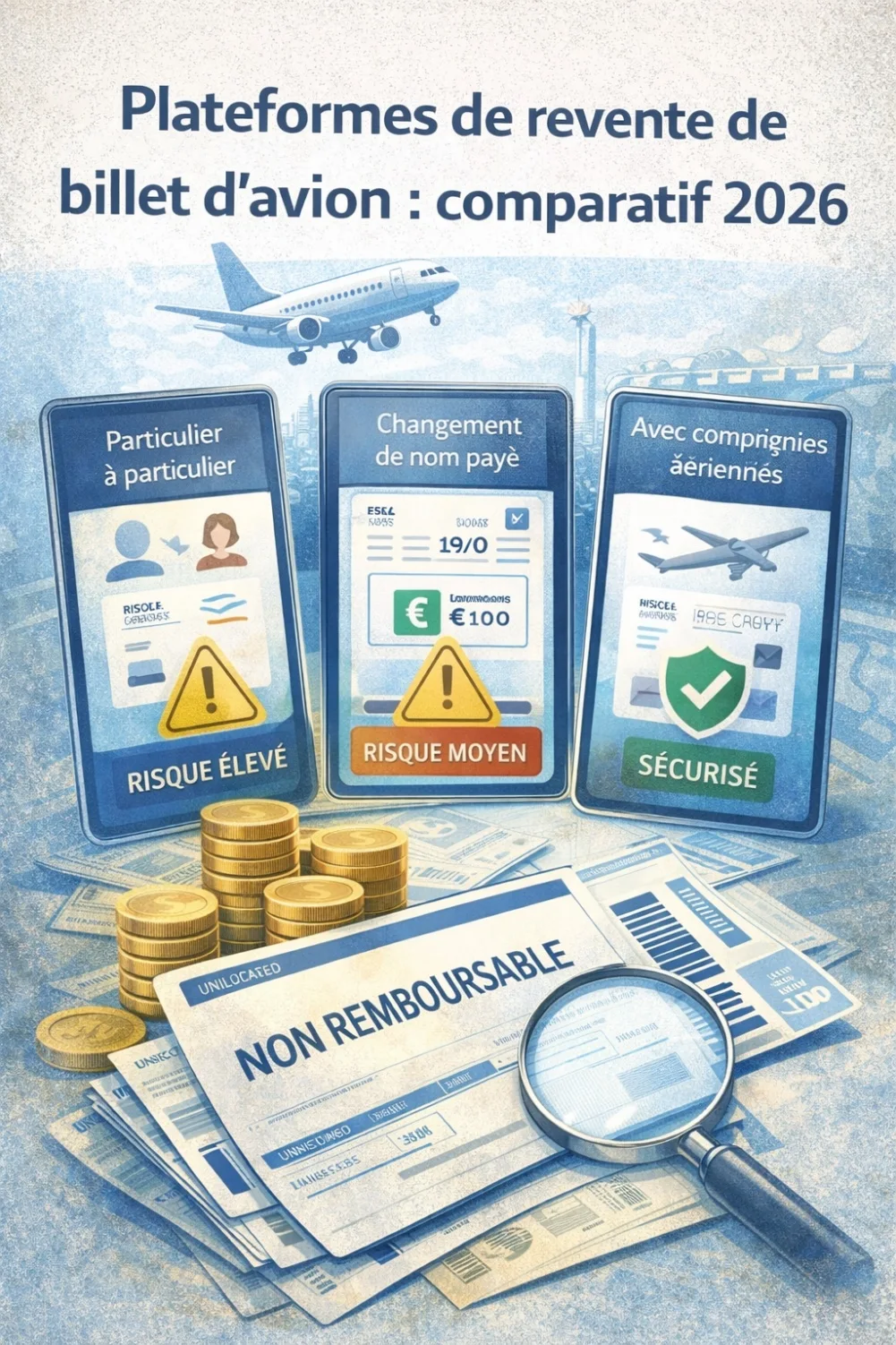
2026 Comparison of Platforms to Resell Non-Refundable Flight Tickets
Losing a non-refundable flight ticket has become a frequent situation for many travelers. Between personal unforeseen events, professional changes, or administrative constraints, millions of tickets are never used each year. Faced with this reality, numerous platforms and applications offering flight ticket resale have emerged.
However, they do not all work the same way, do not offer the same level of security, and do not always respect the legal framework imposed by airlines. In 2026, it is essential to understand the different resale platform models, their advantages, their limitations, and associated risks before making a choice.
Different Models of Flight Ticket Resale Platforms
Why These Platforms Have Developed
The growth of resale platforms is directly linked to the evolution of the air market. Airlines have gradually generalized non-refundable tickets to offer attractive fares while securing their revenues. This strategy shifted financial risk to the passenger.
For many travelers, losing 100% of a ticket price is difficult to accept, which created a clear need for alternative solutions.
Peer-to-Peer Resale Platforms
Operating Principle
These platforms connect a seller and a buyer, often in the form of a marketplace. The ticket is resold to a third party, generally subject to a name change authorized by the airline.
Advantages
- Ability to set your own price
- High recovery potential if demand is strong
- Functioning similar to classic resale platforms
Disadvantages
- Total dependence on airline rules
- Sometimes high name change fees
- No boarding guarantee
- Risk of fraud or disputes between individuals
This model is now considered risky, especially for travelers unfamiliar with airlines' contractual conditions.
Platforms Based on Paid Name Change
Operating Principle
Some airlines allow name changes for fixed or variable fees. Platforms exploit this possibility by automating administrative management and connecting buyers and sellers.
Advantages
- Clearer contractual framework than direct resale
- Compatibility with certain low-cost airlines
- Partially secured process
Limitations
- Sometimes very high fees, significantly reducing recovered amount
- Resale impossible if airline refuses the change
- Sometimes long processing times
This model works mainly for short-haul flights and low-value tickets.
Regulated Resale Platforms with Airlines
A Model in Strong Growth in 2026
This model is based on a completely different logic. The ticket is not resold to another individual, but offered to the airline itself, only if it can put it back on sale.
Functioning
- Passenger deposits ticket on platform
- Platform analyzes flight occupancy rate
- If flight is full or highly demanded, airline can buy back the ticket
- Passenger receives partial refund
Advantages
- Total compliance with sales conditions
- No risk of boarding refusal
- High legal security
- Transparent process for traveler
Disadvantages
- Partial refund only
- Dependence on flight occupancy
- No resale guarantee
This model is now considered the most legally reliable.
Synthetic Comparison of Models in 2026
Peer-to-Peer Resale
- • Risk level: High
- • Legal security: Low
- • Airline compatibility: Limited
Paid Name Change
- • Risk level: Medium
- • Legal security: Medium
- • Airline compatibility: Variable
Regulated Resale with Airlines
- • Risk level: Low
- • Legal security: High
- • Airline compatibility: Expanding
Essential Criteria for Choosing a Resale Platform
Transparency on Functioning
A reliable platform must clearly explain:
- Who buys back the ticket
- Under what conditions
- When payment occurs
Payment Security
It is essential to avoid direct payments between individuals and prefer platforms using secure systems or escrow services.
Respect for Airline Conditions
Any platform that encourages bypassing airline rules exposes the traveler to boarding refusal.
Common Mistakes to Avoid
- Using unsecured groups on social networks
- Transmitting ticket information before payment
- Believing in guaranteed refund promises
- Ignoring specific ticket conditions
Market Trends in 2026
The flight ticket resale market is evolving toward:
- More partnerships with airlines
- Better technical integration
- A desire to reduce economic waste
Serious platforms now seek to establish a win-win logic between travelers and airlines.
Conclusion
In 2026, not all flight ticket resale platforms are equal. Behind the same objective—recovering part of the price of an unused ticket—hide very different models with varying risk levels.
For travelers, understanding the real functioning of a platform is essential to avoid unpleasant surprises and prioritize secure and legally sound solutions.
Looking for the safest resale platform in 2026? ResellMyFlight.com offers regulated resale directly with airlines, ensuring maximum legal security and transparent pricing. Compare and choose the most reliable solution for your unused tickets.